
Designing a better pre-program experience
the experience between signup and kickoff
This is for anyone running a program who wants to be more intentional about what happens in that window between when someone signs up and when the program actually begins. Whether you manage programs or you are a founder leading one yourself, you will find this very helpful.
I have also linked a free template at the end that you can use to map out an entire program from the planning up until the wrap up.
When you are running a program whether that is a coaching, mentorship, or training program, your members’ experience does not begin at the first session, it begins the moment they sign up to be a part of the program. And everything you do in that early window shapes how they arrive on day one and how committed they feel to see it through.
a. The feeling
Someone just signed up for your program; they clicked the button, entered their details, and completed the transaction (if any). On your end it is a successful signup, but on their end it is a mix of excitement and uncertainty, and they are wondering what happens next.
Before you design anything, you need to consider how the person on the other side would actually feel when signing up. It could be excitement; they’ve been thinking about this, they finally committed, they’re ready. It could also be uncertainty; is this the right decision? Did I spend wisely? What exactly am I getting into? Most times, it is both at once.
The work of the pre-program period is not to overwhelm people with information but to meet whatever they are feeling with the right response. For the excited person, you want to sustain and direct that energy. And for the uncertain person, you want to replace their feeling with clarity. In both cases, the worst thing you can do is go silent because when there is no communication, those feelings will either decline or intensify.
b. The first communication
The first communication after someone signs up is the most important one and the most commonly mishandled. An automated payment confirmation or receipt is not a welcome, that’s just an acknowledgement.
You need to have a formal welcome message that;
affirms the decision they just made
tells them what happens next, and
gives them at least a clear action to take or something to look forward to.
It does not have to be so long and bulky but clear enough to communicate important details to your participants.
“Welcome to the program, we’re so glad you’re here” is fine but vague.
“Welcome — you’ve just joined a cohort of people who are X, and here’s exactly what the next two weeks look like before we kick off” immediately gives someone orientation.
Also, there is nothing wrong with automating parts of your communication. In fact, for most programs without a large team, automation is what makes consistency possible. Your welcome email, reminder sequence, onboarding and orientation messages can all be set up once and delivered without you having to send them manually every time.
The balance would be to know where automation ends, and human presence begins. When a participant reaches out with a concern or in any situation where something has gone differently than expected, someone needs to respond and do so in a reasonable amount of time.
c. Set expectations
Many programs explain themselves very well during marketing and very poorly after people have signed up. Even if you have described the program clearly in your marketing, people need a reminder of what to expect now that they are actually committed.
Setting expectations helps your participants to mentally settle into the program before it even begins, and it also answers the questions they may be asking like “how long are the sessions, what’s the format, what do I need to prepare, what’s the level of commitment expected, what happens if I miss something, who else is in this with me?”
You should answer these questions before the program starts, whether it is through an orientation email, a participant guide, an FAQ document, a short video walkthrough, or a pinned message in your community space
d. Build connection
For programs with a longer gap between signup and kickoff, anything more than a week or two, a single welcome email is not enough to maintain connection. This does not mean overwhelming people with constant updates, but having a communication flow that keeps the program present in their minds and builds anticipation towards the kickoff.
You can share a brief introduction to the community space if you have one, prompt interactions within the community, or send a “we start in X days” reminder with something to look forward to.
e. Make it easy to ask questions
Another thing that gets overlooked in pre-program communication is telling people clearly and specifically who to contact and how. This matters more than it seems, because when a participant has a question and doesn’t know where to take it, they either sit with the uncertainty or make assumptions, and neither of those outcomes serves you or them.
A simple line at the end of your communication that says “if you have any questions, you can reach [name] at [contact method] and we’ll get back to you within [timeframe]” does more for your participants than you realise.
f. When things change
Dates shift, details get reviewed, logistics move around, and sometimes things do not come together on the timeline you originally communicated. How you handle these moments in the pre-program period will do more for your participants’ trust than almost anything else you do.
Communicate early and communicate clearly. The moment you know something has changed that affects their experience or expectations, let them know. Not when you have every detail sorted, not when the new plan is fully confirmed, but as soon as you know enough to say something meaningful.
Waiting until you have everything figured out before communicating a change is a common instinct, but it often means people find out later than they should and with less time to adjust.
When something changes, acknowledge the change without over explaining or over apologising in a way that creates more anxiety, tell them what it means for them, and let them know what happens next.
g. The kickoff
The day your program begins is not a fresh start but a continuation of the experience you have created from the signup. If you have been intentional about welcoming people, setting expectations, keeping the connection, and building anticipation, the first session should feel like a natural next step and not feel like everyone is meeting for the first time.
This means the energy and tone of your first session should acknowledge and build on what came before; reference things you communicated, build on the expectations you set, and make space for questions and feedback.
The first session also gives you insight into how well your pre-program work landed. Were people prepared? Did they arrive knowing what to expect? Were there questions that suggested something wasn’t communicated clearly enough? Pay attention to what comes up on day one, because it will tell you exactly where your pre-program experience has gaps that are worth closing before your next cohort.
Thoughtful program experiences are not created by accident. They are the result of small, intentional decisions made consistently behind the scenes that help participants feel guided instead of left to figure things out on their own.
The pre-program experience is just one piece of the puzzle and I hope to explore other parts of what happens during the program to how you wrap it up and what comes after.
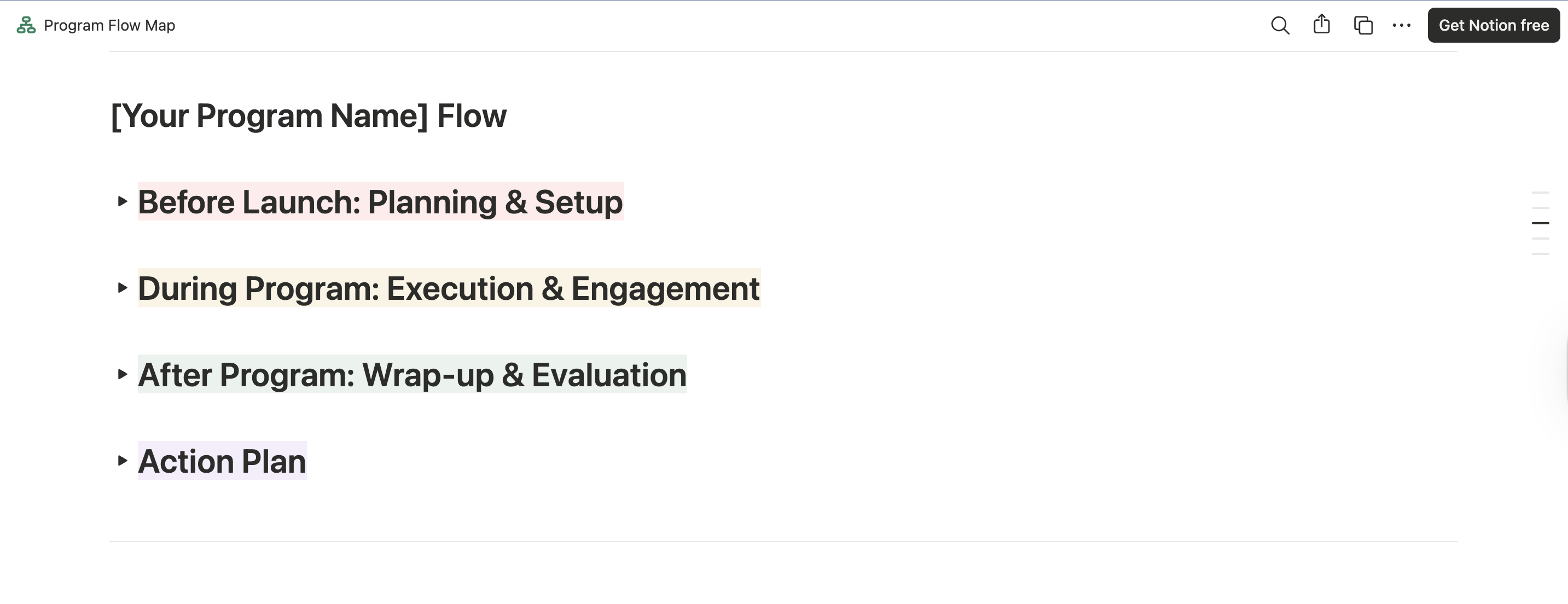
In the meantime, I have created a FREE Program Flow Map (Notion template) that helps you map your entire program from planning through onboarding, delivery, and wrap-up.
It's designed to help you:
spot gaps in your participant experience
organise the moving parts behind your program
think more intentionally about communication and operations
create programs that feel thoughtful from beginning to end
You can access it here ↓
Thank you for reading!